If you’re a CMO or VP evaluating enterprise SaaS SEO agencies, two things tend to separate the ones worth shortlisting from the ones that aren’t.
- Buying committee fluency. You need an agency that understands how enterprise SaaS deals actually move, across multiple stakeholders, over long cycles, with procurement, security, and legal all having a seat at the table. An agency optimising for a single decision-maker isn’t built for your buyer.
- A direct line between SEO investment and board-level metrics. Not rankings. Not sessions. CAC efficiency, pipeline contribution, and ARR influence. An agency that can’t speak that language will cost you credibility internally every time you present results.
We’ve broken down a list of some of the strongest agencies in the space, with a few pointers to help you pick the right fit for your stage and growth goals.
Quick Comparison: Top Enterprise SaaS SEO Agencies 2026
| Agency | Primary Specialisation | Monthly Retainer | Best For | Location |
|---|---|---|---|---|
| GrowUp | Revenue-led SEO and AI search optimisation for enterprise B2B SaaS. | £5,500–£10k+/mo | Series A–D SaaS companies with high ACV deals and multi-stakeholder buying committees, where organic search isn’t yet showing up in pipeline and needs to within two quarters. | UK (Midlands / Remote) |
| Directive Consulting | Integrated SEO and paid media for enterprise SaaS | Not published, on request | Series C+ SaaS companies with a RevOps function already in place that need SEO and paid media managed as one integrated demand programme. | Irvine, CA (global) |
| Skale | >SaaS-only SEO with senior embedded team model. | Not published, on request | Series B+ SaaS companies where organic is generating traffic but not pipeline, and need a specialist team working backwards from revenue targets. | London (remote-first) |
| Powered by Search | SEO and demand generation for long-cycle B2B SaaS. | Not published, on request | Series B–D SaaS with high ACV products and 6–12 month sales cycles that need SEO, content, and paid operating as one coordinated system. | Toronto, Canada (remote-first) |
| Omniscient Digital | Content-led organic growth for B2B software companies. | $10,000+/mo | >B2B SaaS companies that want the editorial rigour and commercial accountability of a senior in-house growth team. | Austin, TX (remote-first) |
1. GrowUp
Location: UK-based (Midlands/Remote)
Pricing: £5,500–£10k+/month
Specialisation: Enterprise SEO and AI search optimisation for complex, multi-product platforms operating in competitive global markets
Best For: Series A–D and scale-stage SaaS companies selling into multi-stakeholder buying committees who need organic search tied directly to pipeline creation, sales velocity, and revenue attribution.
How GrowUp Approaches Enterprise SaaS SEO
| Milestone | Strategic Execution | Measurable Outcomes | Governance & Alignment |
|---|---|---|---|
| Months 0–1 Revenue Infrastructure & Attribution Control |
|
Clear visibility into organic pipeline contribution. 2–5% CVR lift on bottom-funnel pages within weeks of going live. | 45-min CMO / VP Marketing kickoff. ARR targets, buying committee mapping, and product roadmap alignment before execution begins. |
| Months 2–3 Market Capture |
|
First organic-sourced SQLs recorded in CRM. Increased demo volume from non-branded commercial terms. Organic influencing active enterprise opportunities. | Monthly Pipeline Review (30m). Attribution accuracy, content-to-demo conversion, and deal-influence signals reviewed against MRR and SQL targets. |
| Months 4–5 Authority Scaling |
|
2x growth in organic demo volume. Top 3–5 rankings across core commercial terms. Organic consistently influencing closed-won revenue. | Quarterly Business Review (60m). Board-ready reporting on pipeline contribution, CAC efficiency, sales cycle compression, and market share growth. |
| Month 6+ Category Leadership |
|
Organic share of SQLs stabilises at 20–35%. Channel CAC 40–60% lower than Paid. SEO established as a defensible, compounding acquisition engine. | Strategic Roadmap Session (90m). Expansion planning, new market capture strategy, and year-two investment modelling reviewed with CMO and Revenue leadership. |
Case Study Snapshot:
For a UK-based AI-powered project management platform, organic sessions were trending up. Content was being published consistently.
From an internal reporting perspective, nothing looked broken. But revenue wasn’t compounding at the same rate.
When we pulled the funnel apart, we discovered their entire content strategy had been built around early-stage awareness. “What is project management.” “How to set OKRs.” “Roadmap best practices.” Useful topics, but structurally disconnected from how their product was actually bought across a committee.
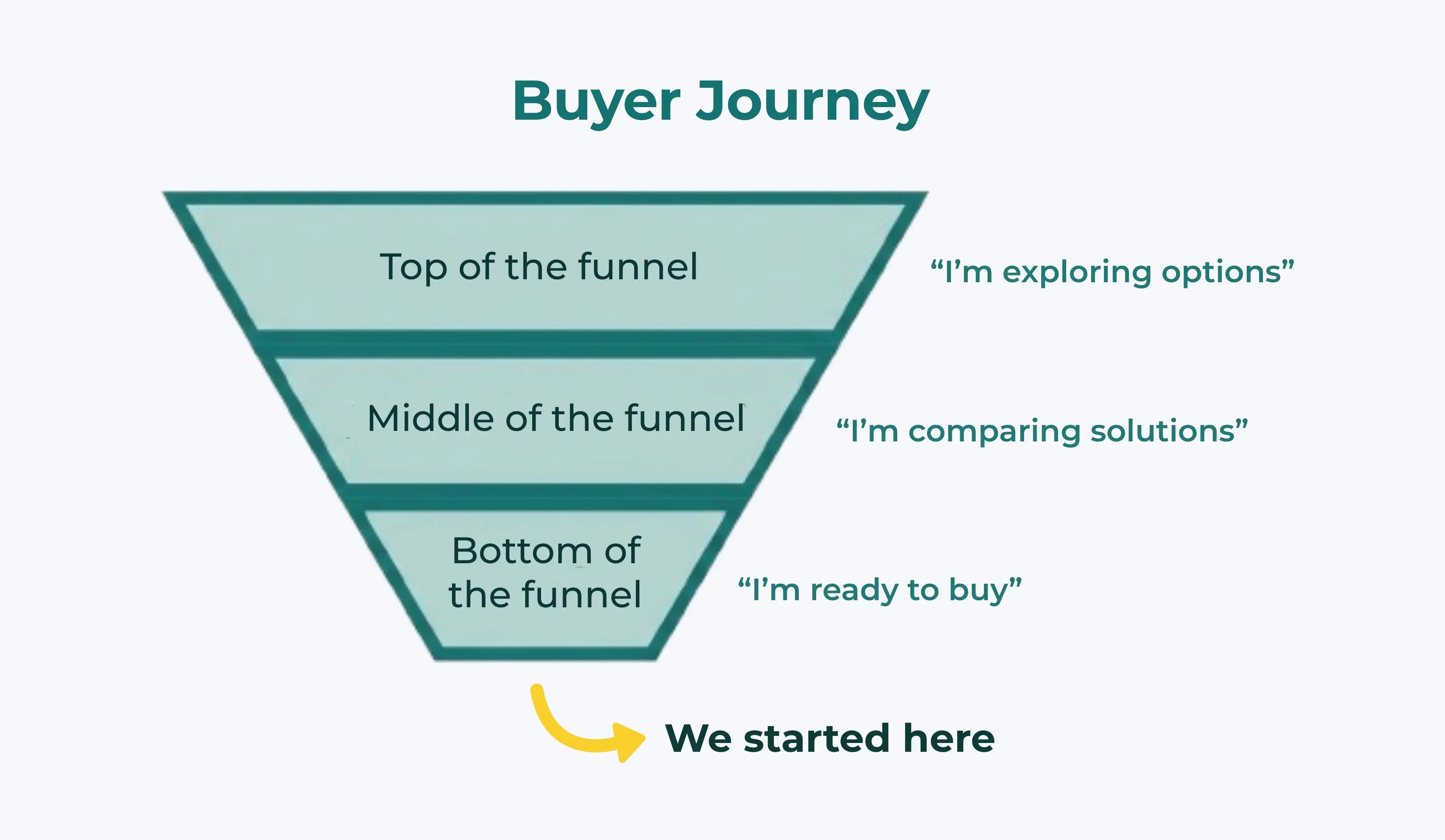
Instead of more top-of-funnel traffic, we built:
- Direct competitor comparison pages structured as genuine buying guides
- CFO-ready ROI frameworks with defensible 12–24 month projections
- Migration and change-management walkthroughs for 100+ user rollouts
- Implementation guides built around objections coming up repeatedly in sales calls.
Every asset was aligned to a specific stage in the deal cycle.
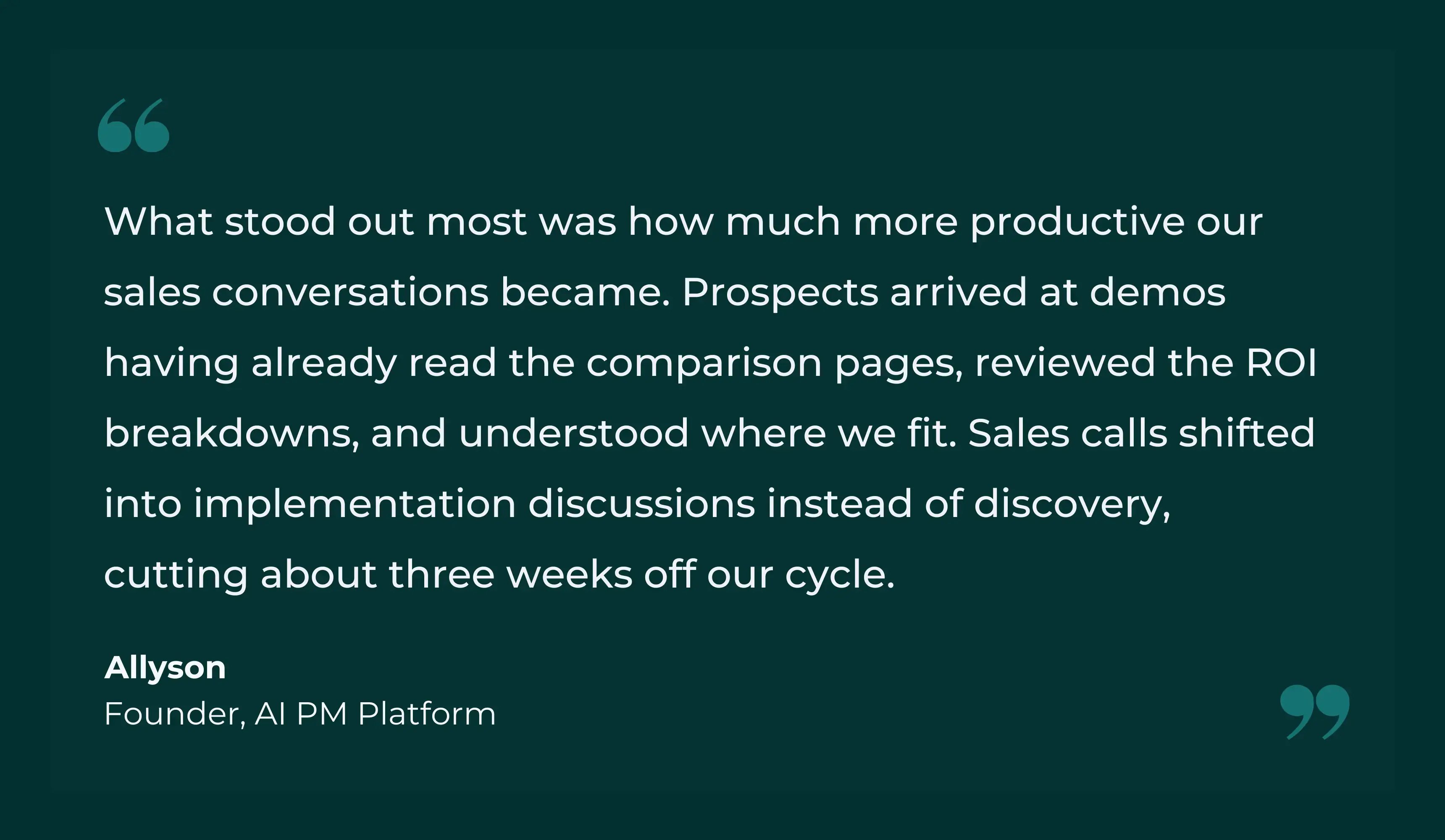
So instead of content running parallel to the sales process, it became the handoff that kept deals moving.
Results achieved within six months:
- 178% increase in monthly demo sign-ups (23 → 64)
- $4.7M in content-influenced pipeline
- 62% improvement in trial-to-paid conversion (12% → 19%)
- 38% reduction in customer acquisition cost
- Sales cycle reduced from 87 days to 64 days
Pros:
- Senior-level access throughout, no account managers or junior delivery layers between you and the strategist running your programme
- Month-to-month flexibility, no long-term lock-in, with the ability to scale scope up or down based on where pipeline pressure sits each quarter
- First-month confidence guarantee, if GrowUp hasn’t demonstrated clear value and alignment within 30 days, you can walk away with no obligation
Cons:
- Not built for teams running multiple simultaneous workstreams. If you need SEO, paid, social, and PR managed under one roof, you’ll need additional resource alongside this engagement.
- The closed-loop reporting model requires CRM access and clean pipeline data. If deal stages aren’t defined or attribution is inconsistent internally, the first month will be slower than projected.
When to Choose GrowUp:
You’re Series A–D SaaS selling complex platforms (AI PM, fintech, edtech) into multi-stakeholder committees, and you need organic search delivering pipeline attribution and sales velocity signals your board can see in the next two quarters.
2. Directive Consulting
Location: Irvine, CA (global, with offices in London and Toronto)
Pricing: Not published, on request
Specialisation: Enterprise SaaS SEO, Paid Media, RevOps Integration
Best For: Enterprise SaaS and tech companies that need SEO tied directly to pipeline metrics and board-level revenue reporting.
Directive is built around what they call a Customer Generation methodology, the idea that SEO shouldn’t be measured in rankings or traffic, but in pipeline, LTV:CAC ratios, and revenue outcomes.
They work across both organic and paid channels, which means SEO isn’t treated as a standalone function but as part of a broader demand engine.
That integrated approach is genuinely useful for enterprise SaaS teams where organic and paid budgets are managed together and the reporting bar is high.
Notable Results:
Over $1B in revenue generated across enterprise SaaS clients, with a 4.8/5 rating on Clutch from 56+ reviews.
Pros:
- Rare enterprise-grade infrastructure: multi-disciplinary team across SEO, paid, CRO, and RevOps in one shop
- Proven at true enterprise scale with household SaaS names
Cons:
- Breadth of services means SEO isn’t always the primary focus, better suited to teams that want an integrated growth partner
- Some clients note the onboarding phase is slower than leaner boutique agencies, which matters if pipeline pressure is immediate.
When to Choose Directive:
You’re a Series C+ company with a revenue operations function already in place, and you need an agency that can plug into that infrastructure and tie organic search directly to sourced pipeline and board-level ARR reporting.
3. Skale
Location: London (remote-first, distributed global team)
Pricing: $5,000–$15,000/mo
Specialisation: SaaS-only SEO, SQL-focused content, ARR-gap analysis
Best For: Enterprise SaaS brands that want a specialist senior team embedded into their marketing function, with commercial KPIs baked in from day one.
Skale works exclusively with SaaS and tech companies, with a sharp focus on SQLs and pipeline. Their enterprise practice is built around ARR-gap analysis, working backwards from revenue targets to identify the organic search volume required to close the gap.
Rather than assigning a single generalist, Skale embeds a six-person senior team directly into your marketing function, which matters at enterprise scale, where every junior handoff means another reset on context, priorities, and momentum.
Notable Work:
Typeform, HotJar, G2, and TravelPerk, with case studies showing a 176% revenue increase for Rezi.
Pros:
- SaaS-only focus means no translation layer between your world and theirs
- Senior team embedded model, consistent points of contact throughout
- Commercially grounded: MRR and CAC payback are the actual KPIs
Cons:
- The “embedded” model requires a high level of transparency and access from the client side.
- May lack the broader “general marketing” perspective found in multi-industry agencies.
When to Choose Skale
You’re a Series B+ SaaS company where organic is generating activity but not pipeline, and you need a senior team that can work backwards from ARR targets and build a search programme around closing that gap.
4. Powered by Search
Location: Toronto, Canada (remote-first, distributed global team)
Pricing: Not published, on request
Specialisation: B2B SaaS SEO, Demand Generation, RevOps Integration
Best For: Series B–D SaaS companies with high ACV products and complex, multi-stakeholder sales cycles that need SEO, content, and paid working as one integrated system.
Powered by Search’s Predictable Growth methodology is built around three variables: high ACV deals, long sales cycles of 6–18 months, and buying committee dynamics, which shapes how they approach everything from content architecture to pipeline attribution.
Their model combines pain-point SEO, Authority Architecture, and demo-focused content into a single demand engine rather than treating organic as a standalone channel.
Notable Results:
Delivered for enterprise players like Varonis, VMware, Fortra, driving $100M+ annual client pipeline.
Pros:
- Deep experience with technically complex, long-cycle B2B sales
- Integrated across SEO, paid, content, and RevOps, so organic doesn’t sit in isolation from the rest of the demand programme.
- Strong fit for security, infrastructure, or compliance-heavy SaaS where the content bar is high and generic agencies tend to struggle.
Cons:
- The framework-driven approach requires patience, if your board needs pipeline movement in 60 days, this isn’t the right starting point.
- Depth of methodology means onboarding takes longer than leaner boutique engagements.
When to Choose Powered by Search:
You’re a Series B–D SaaS company with a high ACV product, a 6–12 month sales cycle, and you need a cohesive demand generation partner that understands how to weave SEO, content, and paid into a system that influences pipeline.
5. Omniscient Digital
Location: Austin, TX (remote-first, distributed global team)
Pricing: $10,000+/mo
Specialisation: Organic Growth, Content-Led SEO, Pipeline Attribution
Best For: B2B software companies that want a senior, editorially rigorous approach to organic growth, with reporting tied to pipeline and revenue
Omniscient was founded by former growth and content leaders from HubSpot, Shopify, and Workato, and that operating background shapes how they think.
Their barbell content strategy focuses on two ends of the spectrum: high-intent, conversion-oriented content at the bottom of the funnel, and credibility-building thought leadership at the top, with less investment in the middle-of-funnel content that tends to generate traffic without revenue.
Notable Results:
High-growth partnerships with SAP, Asana, Jasper, TikTok, Loom, and Hotjar, a portfolio that spans both enterprise incumbents and fast-growing SaaS brands.
Pros:
- Commercially rigorous: content strategy is anchored to pipeline and revenue attribution from the start
- Strong portfolio across both enterprise incumbents and fast-growing SaaS
Cons:
- Full-service engagements start at $10,000 per month, one of the higher floors on this list, and reflective of the seniority they bring.
- Content-led model means limited support if paid media or deep technical SEO is your primary gap.
When to Choose Omniscient:
You have the budget to hire a “Head of Growth,” but you’d rather have an entire team of veterans who have already done it at global scale.
What to Look For When Choosing an Enterprise SaaS SEO Agency
The difference between an enterprise SaaS SEO agency and a generalist who works with SaaS companies isn’t always obvious from a proposal. To separate a strategic partner from a content vendor, look for these specific indicators.
| Strategic Indicator | What It Means in Practice |
|---|---|
| Commercial weighting vs. search volume | If an agency leads with “Keyword Volume" before asking about your average ACV or sales cycle length, they are thinking like generalists. You need a strategy built around your ICP’s pain points, even if those terms only get 50 searches a month. High-intent, low-volume terms often drive more revenue than generic “Awareness” keywords. |
| Multi-stakeholder content architecture | Enterprise deals aren’t won by one person. If an agency can’t map your entire buying committee: the CTO’s integration fears, the CFO’s ROI requirements, Legal team’s security checklists, and build content architecture around it, they are just writing blog posts. |
| Genuine international SEO capability | Global expansion is not translated content. Ask specifically about hreflang implementation, regional domain architecture, and experience coordinating SEO across distributed teams. A slide about global reach is not the same thing. |
| ABM and intent data integration | Organic search and ABM aren’t separate programmes anymore. Ask how they use intent signals from platforms like Bombora or 6sense to shape content investment and account prioritisation. If those workstreams don’t talk to each other, your organic program will miss high-intent accounts already in market. |
| Technical SEO at enterprise scale | Multi-product platforms have real infrastructure complexity: crawl budget, JavaScript rendering, Core Web Vitals across thousands of pages. Ask for examples at that scale, not a technical audit template. |
| Board-ready attribution | Traffic case studies are a red flag. Ask for references that speak to organic pipeline influence and CAC reduction. You need to see how they prove to a CFO that a piece of content touched a $100k deal. If they can’t connect search data to your CRM, you’ll never be able to defend the budget. |
What Enterprise SaaS Companies Realistically Spend on SEO
SEO budgets vary enormously depending on where you are in the journey. Here’s what each investment level buys you, and what it’s designed to do.
| Tier | Monthly Retainer | Core Services Included | Best For |
|---|---|---|---|
| Foundation Enterprise | £5,000–£8,000/mo | Technical SEO audit, enterprise ICP keyword mapping, initial multi-stakeholder content architecture, baseline pipeline reporting. | Series B SaaS companies entering enterprise sales for the first time and building the organic foundation before scaling investment. |
| Growth Enterprise | £8,000–£18,000/mo | Full technical SEO governance, multi-persona content programme across 10 to 20 pieces per month, enterprise intent targeting, link acquisition, monthly pipeline attribution reporting. | Series C–D companies with an established enterprise sales motion that need SEO to demonstrably contribute to pipeline and SQLs. |
| Scale Enterprise | £18,000–£35,000/mo | Multi-region international SEO, dedicated content teams per product line, ABM integration, enterprise-grade revenue attribution, senior strategic account lead. | Established SaaS businesses with multi-product suites and international expansion underway, where organic must perform across markets. |
| Global Enterprise | £35,000+/mo | Custom international SEO infrastructure, embedded client-side resource, board-level reporting, full coordination with regional marketing and product teams. | Global software businesses with multi-market operations that need SEO governance coordinated across regions, product lines, and C-suite revenue reporting. |
Finding a Specialist SEO Partner That Understands Enterprise SaaS
Enterprise SaaS has one of the most demanding buying environments in B2B. You’re selling complex products into multi-stakeholder committees, across long sales cycles, often in competitive global markets where the content bar is high and generic organic programmes don’t move pipeline.
You need a strategy built around how your product is actually bought, not reverse-engineered from a search volume report.
We work with a small number of enterprise SaaS companies at any one time to maintain the depth that kind of engagement requires. If the timing is right for your growth, we’d be glad to explore whether there’s a fit.
If you’re still evaluating whether you need a dedicated SEO partner or how to structure that relationship, our guide to choosing a B2B SaaS SEO agency walks through the decision in detail.