What makes GrowUp different from a typical B2B SaaS SEO agency?+
We built GrowUp around a different measurement model. Instead of treating rankings and traffic as the end goal, we built AttributeIQ, a multi-touch attribution platform to connect search activity with pipeline and closed-won revenue.
That changes how we plan the work. Technical SEO, content, commercial pages, and GEO/LLM visibility are prioritised based on their potential business impact, while CRM data and sales intelligence help determine where we invest resources.
Do you work as a B2B SaaS SEO agency, a GEO agency, or both?+
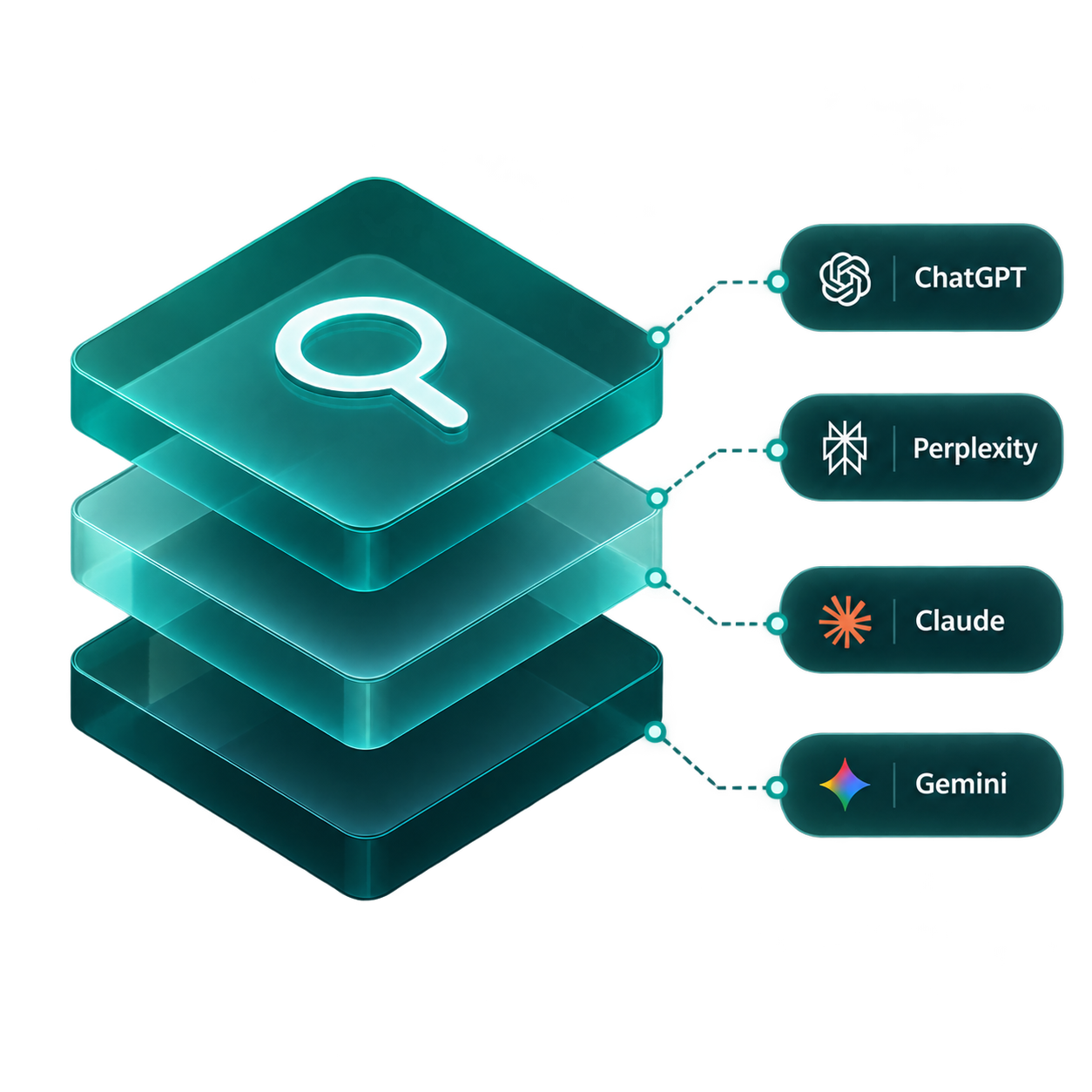
Both. We’re a B2B SaaS SEO agency that also optimises for visibility in ChatGPT, Gemini, Perplexity, and AI Overviews. We don’t sell GEO separately because the work overlaps: technical foundations, structured content, and authority signals improve both traditional rankings and LLM citations. But if you only want GEO, we can scope that standalone.
What is GEO (Generative Engine Optimisation), and do you offer it as a standalone service?+
GEO is the practice of optimising content and technical structure so AI systems like ChatGPT, Gemini, and Perplexity cite or recommend your brand in response to relevant queries, instead of, or alongside, traditional search rankings.
Yes, we offer it as a standalone service via our
LLM SEO Optimisation package, though most clients run it alongside core SEO for compounding results.
What types of B2B SaaS companies get the most value from working with an SEO agency like yours?+
Companies that fit best typically have:
- A defined ICP and a sales cycle where buyers research before talking to sales.
- Some existing organic traffic or content, but no clear line to pipeline.
- Deal values high enough to justify a 6-12 month organic investment.
When does it make sense to hire a B2B SaaS SEO agency vs. building an in-house team?+
Hire an agency when SEO hasn’t reached critical mass yet, your GTM is still evolving, or you don’t have anyone senior enough in-house to QA technical and content work properly.
Build in-house when you’re consistently generating £50K+ MRR from organic, your ICP and positioning are stable, and you have the systems (content ops, technical foundations) to support a full-time hire without a 6-month learning curve.
Most scale-ups and enterprise teams land on a hybrid: a lean internal owner for approvals and coordination, with an agency handling strategy and execution.
Do you only provide SEO strategy, or do you also execute technical SEO and content?+
We do both, strategy and full execution. That includes content research, writing, and optimisation; technical implementation (schema, site architecture, indexing); digital PR and link acquisition; and full analytics setup across GSC, GA4, Semrush, and LLM visibility tracking.
What does onboarding look like when we start working with your B2B SaaS SEO agency?+
Onboarding takes 14 days. Week 1 covers analytics access, CRM tracking connections, sales call recordings intake, and a 60-minute alignment workshop. Week 2 delivers technical audits, competitive positioning maps, and a prioritised 30/60/90-day pipeline roadmap. Execution begins immediately in Week 3.
Do you offer a trial project before committing to a full SEO or GEO retainer?+
Yes. We run a paid pilot, £3,500 over 3-4 weeks. We optimise 1–2 key landing pages for immediate conversion lift, fix high-impact technical gaps, and launch one high-intent content piece. This proves our execution speed, communication style, and commercial focus before you make a long-term commitment.
What happens if we need to pause or scale back our engagement mid-contract?+
We require a 30-day written notice to pause or modify scope. You can pause engagements for up to 90 days without losing your pricing tier or dedicated team setup. All work completed up to that point remains your complete intellectual property.
How much does a B2B SaaS SEO agency like GrowUp typically cost?+
Our monthly retainers range from £4,000 to £10,000/month depending on company scale, content production volume, and technical complexity. One-off audit and pilot programs start at £3,500.
Is your pricing based on retainer, project scope, or performance?+
We primarily utilise flat monthly retainers. This guarantees dedicated resource allocation, continuous technical monitoring, and steady content creation. Fixed-fee project scopes are available for standalone audits, technical migrations, and initial pilot evaluations.
Do you offer discounts for longer-term SEO or GEO commitments?+
Yes. We offer a 10% discount on 6-month retainers and a 15% discount on 12-month commitments. Annual agreements also include complimentary quarterly executive strategy reviews and priority access to new GEO features.
How long does it take to see results from a B2B SaaS SEO or AI search program?+
30-60 days: quick wins, improved conversion on existing traffic, early ranking movement, cleaner CRM attribution.
Month 3-4: genuine pipeline impact, demos and SQLs you can confidently attribute to organic and AI search, as bottom-funnel pages stabilise in rankings.
Month 6: search becomes a predictable growth lever, often 15-25% of qualified pipeline, with faster sales cycles as buyers arrive informed.
What ROI or payback period should we expect from investing in organic and AI search?+
Most clients hit full program payback within 5 to 7 months. By month 12, a mature program generates 3x–5x ROI in new ARR. Year two returns accelerate significantly as existing organic and AI rankings compound without requiring proportional budget increases.
Do you offer any kind of performance guarantee on pipeline or revenue outcomes?+
No. Guarantees in SEO/GEO are red flags due to factors outside agency control (search engine algorithm shifts, sales team close rates, product changes). We commit to strict output SLA metrics, transparent reporting, and clear pipeline milestones.
How is pricing different between traditional SEO and LLM/GEO optimisation services?+
Standalone LLM/GEO optimisation is generally priced lower than a full SEO program, since it focuses narrowly on structuring content and monitoring AI-platform visibility rather than the full technical, content, and PR stack traditional SEO covers.
Most clients don’t buy GEO standalone though. Because the underlying work overlaps so heavily with core SEO, bundling both into one program is usually more cost-efficient than running them separately, and it’s what we recommend by default.
How do you calculate and report attribution from organic search to closed-won revenue?+
We use AttributeIQ, our multi-touch attribution platform, to map every content touchpoint a contact has, from first visit to demo request to closed deal, against your CRM data.
Rather than crediting only the last click, we show the full journey: which pages influenced the deal, how many touches occurred, and the timeline from first touch to close. Every client engagement includes full platform access (worth £149/month) and monthly reporting tied directly to pipeline and revenue.
What size marketing or SEO budget is a good fit for your programs?+
Our ideal partners allocate £50,000 to £120,000+ annually toward organic growth and AI search strategy. This budget level allows us to deploy maximum content velocity, aggressive technical fixes, and dedicated digital PR execution.