Over the past year and a half, I’ve watched B2B SaaS teams with seven-figure SEO budgets get blindsided by the same problem...
Buyers are forming opinions about their category before any sales conversation happens, and the brands doing the most sophisticated SEO programs are often the ones least prepared for how AI has changed that dynamic.
It’s what pushed us at GrowUp to build a framework for this, and running it across enough brands has given us a clear picture of what moves the needle.
This guide breaks down our LLM visibility strategy and the specific work required to show up consistently across major AI Platforms like ChatGPT and Perplexity.
Understanding LLM Visibility and the GEO Pillars
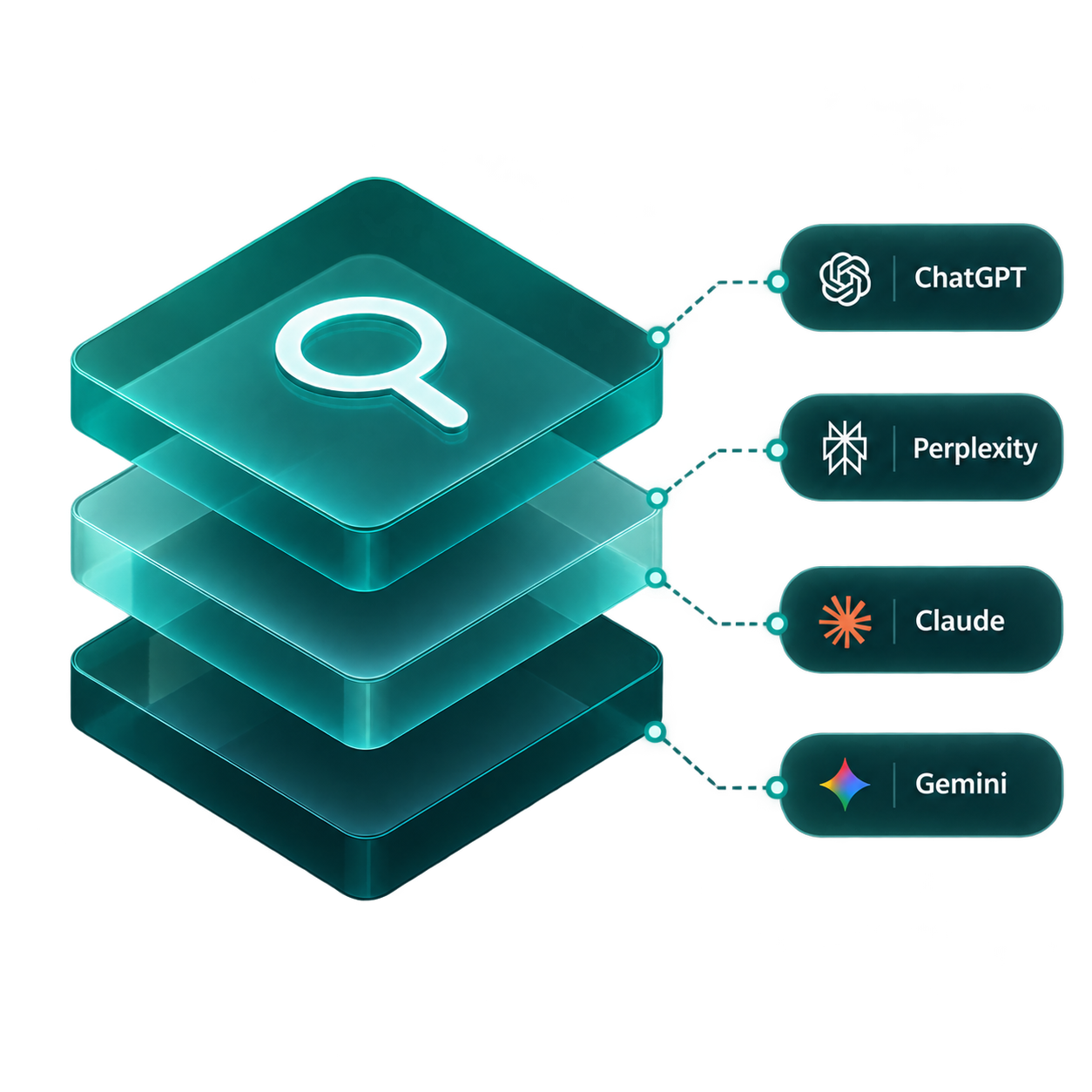
LLM visibility, by contrast, refers to how often and how positively your brand is mentioned in AI‑generated answers across platforms like ChatGPT, Claude, Perplexity and AI Overviews.
While different frameworks exist, they tend to cluster around three fundamental pillars that determine citation success:
| Pillar | Description | Content Implications |
|---|---|---|
| Visibility | Can AI systems find and access your content? | Keep strategic assets: product documentation, case studies, research openly accessible. Prioritise semantic HTML over content that relies heavily on JavaScript to render. |
| Citability | Will AI choose to reference your content over competitors? | Build topical depth with original data, expert quotes, and comprehensive multi-angle coverage; strengthen authority through backlinks and brand mentions |
| Retrievability | Can AI extract and reuse your content effectively? | Structure content for easy extraction: schema markup, logical information hierarchy, and layouts that are both easy on humans and bots. |
Recommended Reading: How to Run a Complete SaaS SEO Audit
Practical Framework for Running an AI Search Visibility Audit
This framework breaks your audit into two core components: how AI currently perceives your brand, and whether you’re visible in the moments that drive buyer consideration.
Brand Perception Audit
Most leadership teams assume they have a clear understanding of how their brand is interpreted in market: internally aligned, clearly understood by customers, and correctly positioned relative to competitors.
AI systems don’t always reflect that reality. In some cases, they construct a version of your brand that conflicts with your strategic positioning.
Recommended action: Implement recurring brand perception audits.
| Platform | Test Query Set | Frequency |
|---|---|---|
| ChatGPT | Standard 5-query set | Monthly |
| Claude | Standard 5-query set | Monthly |
| Gemini | Standard 5-query set | Monthly |
| Perplexity | Standard 5-query set | Monthly |
| Google AI Overviews | Standard 5-query set | Monthly |
Standard branded query set:
- “What is [Brand Name]?”
- “Who is [Brand Name] for?”
- “What does [Brand Name] help with?”
- “What features does [Brand Name] have?”
- “Who are [Brand Name]’s competitors?”
What to check:
Positioning Accuracy: Does AI’s description match your intended positioning?
Audience Alignment: Are the audiences and user traits on point?
Feature Representation: Are your key features and differentiators included?
Competitive Context: Are you linked with the right competitors?
Citation Sources: Which third-party sources is AI referencing about you?
Sentiment & Tone: Is the language positive, neutral, or skeptical?
Factual Accuracy: Are product names, pricing, capabilities correctly stated?
🚩 Watch out for:
- Generic corporate language (“leading provider of enterprise solutions”)
- Missing recent launches or feature updates
- Mentions of products you’ve retired (old content still circulating)
- Being positioned as “niche” when you’re aiming for category leadership
- Citations from low-quality or outdated sources
Category Visibility Audit
Once your branded presence is benchmarked, the next step is understanding how often AI includes you in category‑level conversations: the problem, use case, or solution spaces where buyers actually start searching.
| Question | Metric Focus | How to Check |
|---|---|---|
| 1. Category Share of Voice (SOV) | Presence in relevant buying contexts | Run 10–15 high-intent non-branded queries (e.g., “best [category] for [pain point]” or “software for [use case]”) across ChatGPT, Perplexity, Gemini, Claude. Count mentions/citations. |
| 2. Competitive Citation Rate | How often competitors are cited instead of you in the same answer sets | Compare AI answers: count competitor mentions vs. your mentions across the same query set |
| 3. Content Interpretability | How easily AI systems extract and understand your core messaging | Paste chunks of your product or solution pages into AI tools; test comprehension (“What does this company do?”). Note clarity, accuracy, completeness. |
| 4. Knowledge Graph & Entity Strength | Whether your brand is recognised as an independent entity with structured, accurate data | Check Wikipedia presence, Crunchbase completeness, schema markup implementation, Google Knowledge Panel |
| 5. Authority & Citation Signal Quality | Are authoritative third parties citing you in ways AI can access? | Identify external sources AI references: track domain authority (DA 60+), recency (<12 months), relevance to category |
| 6. Content Coverage & Topic Completeness | Whether your content ecosystem reflects full ownership of category themes | Map key topics against AI-generated summaries; identify missing content areas using competitive gap analysis |
| 7. Tracking & Governance Infrastructure | Whether you have systems to monitor change and own this visibility layer | Establish recurring checks with benchmarks for mentions, accuracy, sentiment; assign ownership |
Running this audit properly takes 8–12 hours of structured work.
You’ll need to run dozens of queries across platforms, document responses, map citation patterns, and benchmark against competitors. Most CMOs don’t have that bandwidth sitting on their team.
Mapping Category Entry Points to AI Retrieval Logic
Buyers aren’t walking into search with neat little keyword lists.
They’re showing up with messy, real-world problems and talking them through with AI: missed deadlines, tool sprawl, unclear ownership, pressure from leadership, all of it bundled together.
Showing up in those moments starts with understanding your Category Entry Points (CEPs), how and when demand actually forms.
Here’s a framework I use to capture those signals. This ensures your content provides the “situational data” AI needs to recommend you.
| Question Type | Purpose | Example (Project Management SaaS) | Content Implication |
|---|---|---|---|
| WHY | What’s the underlying purchase motivation? | “Better task visibility”, “Reduce missed deadlines”, “Coordinate remote teams” | Link functional pain points to measurable outcomes and value. |
| WHEN | What’s the timing or context? | “Before a new sprint cycle,” “During team onboarding”, “After project failure post-mortem” | Build content for decision windows like quarter planning, not just general use cases. |
| WHERE | What’s the physical or digital location? | “Remote team coordination”, “Client-facing work”, “Cross-office collaboration” | Address environment-specific challenges and workflows |
| WITH WHOM | What are the social or contextual factors? | “Manager-led decision,” “Team voted on new tool,” “Executive mandate from C-suite” | Speak to the buying committee dynamics and stakeholder concerns |
| WITH WHAT | What other tools/products are in the workflow? | “Using Slack for communication,” “Already have Jira for dev,” “Need CRM integration” | Build content around integration scenarios and tech stack compatibility |
| WHILE | What are they doing concurrently? | “Setting up OKRs for the quarter,” “Comparing alternatives” | Create content for parallel research activities |
| HOW FEELING | What’s the emotional state? | “Feeling overwhelmed”, “Frustrated with lack of visibility,” “Excited about team growth” | Match tone and messaging to emotional context |
This same CEP mapping is essentially the human-side mirror of query fan-out.
There’s a Google patent that outlines this behaviour in detail, I’ve included a quick guide on it if you want to dig deeper. Definitely worth a look.
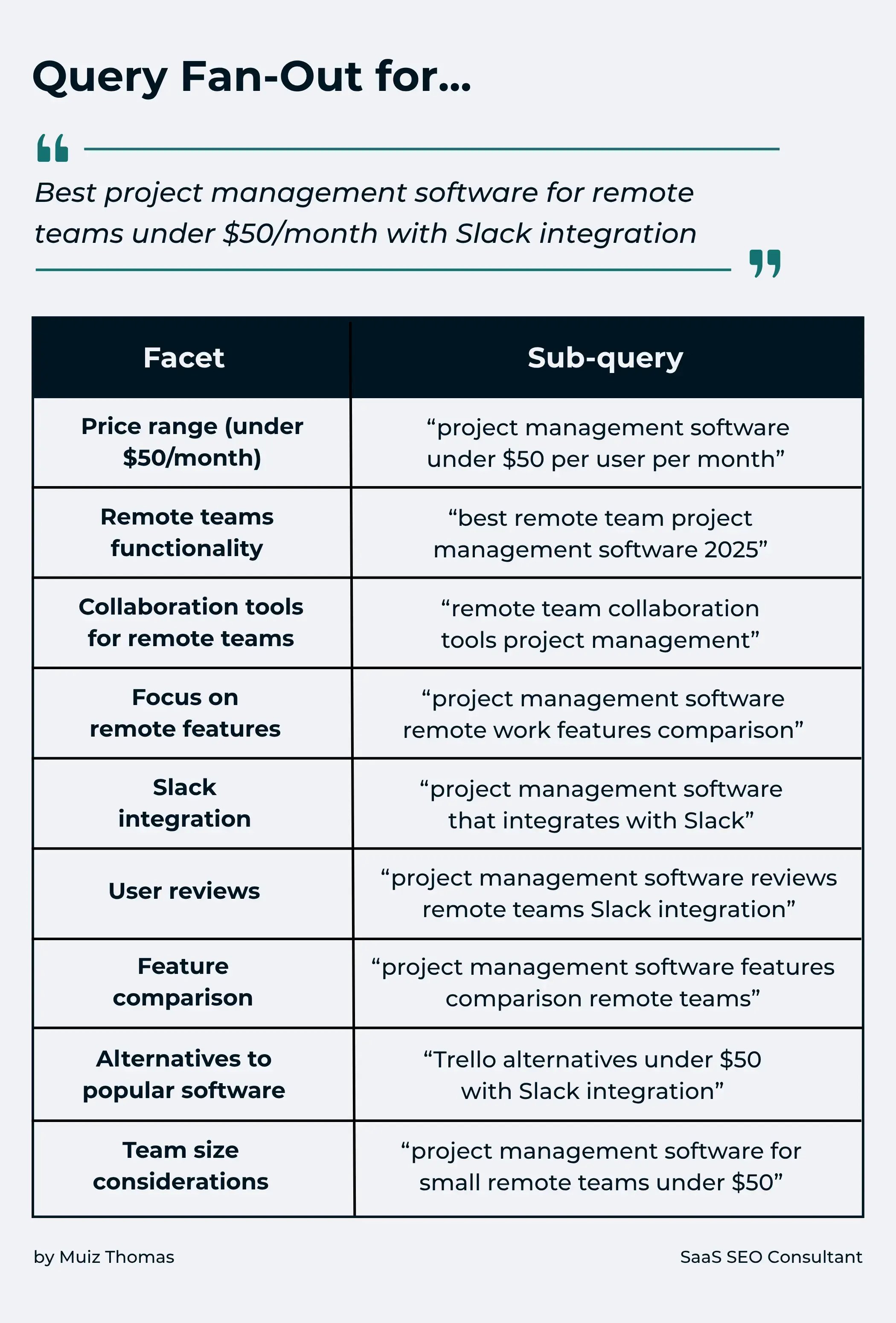
Bottom line: if your content : if your content addresses one part of the buyer’s question but ignores adjacent concerns, your citation probability drops hard across the fan-out spectrum.
Internal Linking Architecture
Once you’ve built content that covers the full fan‑out spectrum, the next step is ensuring AI recognises it as a cohesive knowledge ecosystem.
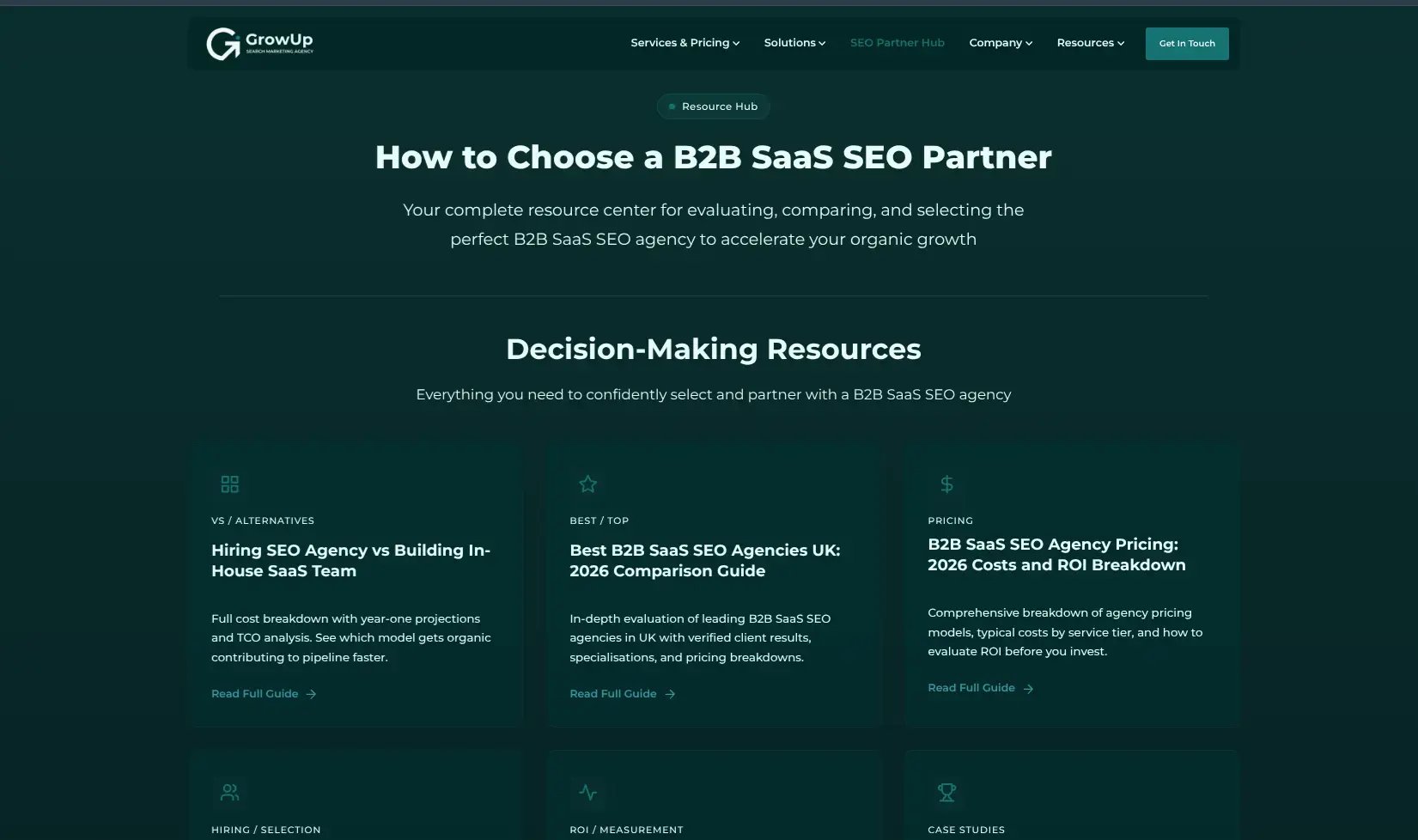
Rather than publishing a single “ultimate guide,” structure your site around a hub‑and‑spoke model, like our evaluating an seo partner setup.
This architecture connects related decision points and makes it easy for AI to understand how your content fits together.
A typical B2B SaaS cluster might look like:
Category Hub Page (e.g., “Revenue Intelligence Software”)
├── Competitive Analysis (positioning against alternatives)
├── Vertical Use Cases (industry‑specific applications)
├── Technical Implementation (integration and deployment guides)
├── Customer Evidence (case studies with quantified outcomes)
├── FAQ Repository (objection handling and edge cases)
└── Economic Model (pricing, ROI frameworks, cost calculators)
Linking principles:
- Each spoke page links to:
- Hub page (1× at top, 1× at bottom)
- 3-5 related spoke pages in same cluster. For example: a case study should link back to the use-case page and the pricing framework it validates.
- 1-2 external authoritative sources (builds trust)
- Use descriptive anchor text (e.g., “compare integration architectures” rather than “click here”). This improves AI parseability.
- Implement contextual jump links:
- Table of contents with anchor links
- “Quick navigation” for 2,000+ word pages
- Makes content easier for AI to parse specific sections
Aligning Brand Messaging Across Channels
If your homepage says one thing, your G2 profile says another, and your LinkedIn tells a different story, AI can’t figure out who you are, and that weakens your brand authority in search.
Strategic Alignment Process
Conduct this audit quarterly. Document current messaging across all major channels, then evaluate for consistency.
Primary Channels to Audit:
- Website (homepage, product pages, about, pricing)
- G2, Capterra, Software Advice, TrustRadius
- LinkedIn company page and executive profiles
- Crunchbase, PitchBook, and investor databases
- PR materials, press releases, and media kits
- Social bios (Twitter, Facebook, Instagram)
- Wikipedia (if applicable)
- Help docs, knowledge base, and support content
Core Consistency Checklist:
Category Definition: Do all channels place you in the same precise category (e.g., “AI-native project orchestration” vs. “team collaboration tool”)?
Core Value Proposition: Is the primary problem you solve and the outcome you deliver stated the same way?
Ideal Customer Profile (ICP): Do audience descriptors (size, role, industry, pain level) align across platforms?
Key Differentiators & Use Cases: Are flagship features, benefits, and primary use cases referenced consistently, without contradictions or omissions?
Brand Voice & Tone: Is the personality consistent? (formal/casual spectrum, technical depth vs. accessibility)
Critical nuance: Consistency doesn’t mean identical copy. Each platform serves different audiences and has distinct contextual norms. Adapt tone and format appropriately, but ensure core positioning elements (category, value prop, audience, differentiation) remain strategically aligned.
Authority Signal Acquisition: Building Third-Party Trust at Scale
For an LLM to confidently recommend your brand, it needs validation beyond your owned channels. That typically shows up as independent signals: analyst coverage, media mentions, research citations, and review platforms.
The more consistently your brand appears in credible third-party contexts, the easier it is for AI systems to recognise you as a trusted solution.
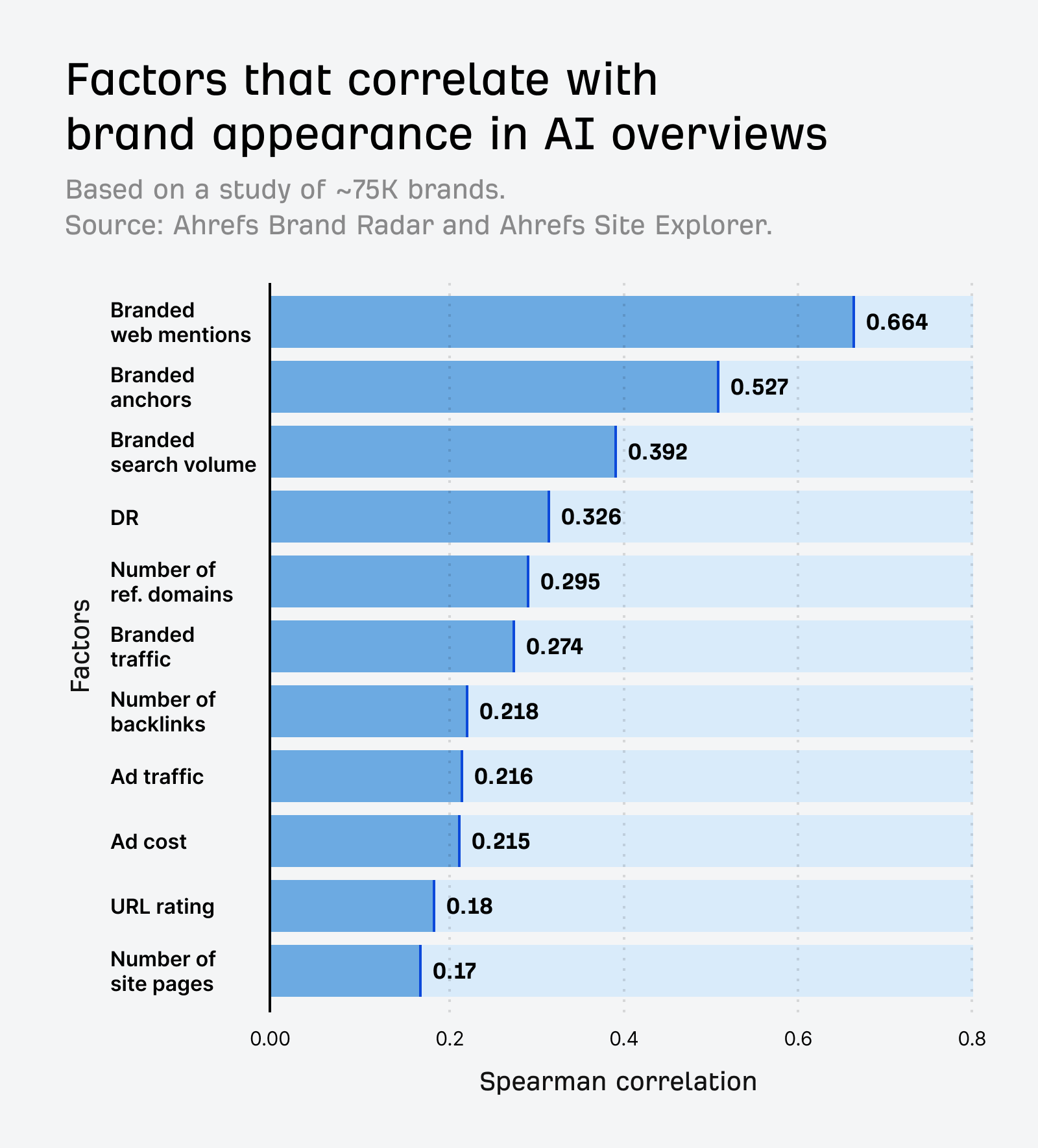
Given how long premium authority signals take to build, I’d advise starting with foundational credibility before layering in category-defining assets.
| Phase | Key Activities |
|---|---|
| Foundation (0–30 days) | Complete structured profiles: Update your Crunchbase, G2 and LinkedIn profiles with accurate company data, leadership bios and category descriptions. Secure a knowledge panel: If you have a Wikipedia entry or a Google knowledge panel, ensure it reflects your current positioning and includes correct external links. Engage niche communities: Participate authentically in Reddit threads, Product Hunt launches or relevant Slack communities where AI models ingest social signals. |
| Industry Authority Development (1–3 months) | Publish original research: Commission or conduct industry benchmarks and share unique findings with trade publications and analyst newsletters. Speak at events and podcasts: Target conferences and podcasts aligned with your buyer community. Provide actionable frameworks and mention your proprietary data. Develop frameworks: Create decision matrices, maturity models, or ROI calculators that define how buyers should evaluate your category. Proprietary frameworks are often cited as a neutral reference. |
| Category Leadership Establishment (3–12 months) | Annual benchmark reports: Publish large-scale reports that become the go-to reference for your industry. Think State of [Category] reports with sample sizes in the hundreds or thousands. These get cited repeatedly by analysts, journalists, and competitors. Analyst relationships: Brief firms like Gartner and Forrester on your roadmap and product vision. Use proprietary data and quantified case studies to earn mentions in their market guides and research notes. Patents and technical white papers: If you’ve built unique technology, file patents and publish technical white papers that explain the innovation without giving away the IP. These signal deep expertise to technical buyers and AI systems alike. |
Recommended Reading: How to Build High-Authority Backlinks for B2B SaaS
Measuring Brand Performance Across AI Search Engines
Measuring performance in AI search requires a different lens than traditional search and digital analytics.
There’s no universal ranking position, no reliable click-through model, and no single dashboard showing performance across ChatGPT, Perplexity, Claude, Gemini, and AI Overviews at once.
Here’s the framework we use at GrowUp to make sense of search performance across these AI models.
| Metric Category | Specific Metrics | How to Measure | Cadence |
|---|---|---|---|
| Visibility | Citation frequency, answer inclusion rate, positioning accuracy | Manual audits (as described here), plus AI visibility tools like Profound, Peec AI or SE Visible | Weekly (automated), Monthly (deep audit) |
| Authority & Sentiment | Volume and quality of external mentions, sentiment of those mentions | Use brand monitoring tools such as Mention or Brand24; evaluate domain authority and sentiment manually | Monthly |
| Technical Readiness | Schema density, crawl accessibility, content parseability | Perform technical audits with Screaming Frog or Sitebulb; check JSON‑LD with Google’s Rich Results Test; confirm that GPTBot, CCBot and Google‑Extended are allowed in robots.txt |
Monthly or after major site changes |
| Business Impact | AI‑attributed traffic quality (time on page, pages per session), conversions from AI‑referred visitors, incremental pipeline or MRR | Use first‑party analytics to identify referral sources (e.g., llama_index query parameters), survey forms asking “How did you hear about us?”, and model attribution based on AI prompts; pair with CRM data for revenue |
Monthly (report to leadership quarterly) |
Recommended Reading: Tracking SEO ROI: Attribution Models for B2B SaaS
Optimisation Loops
The value of measurement is directional clarity. Use performance insight to continuously optimise positioning, channel strategy, and investment choices.
| # | Action | Description |
|---|---|---|
| 1 | Identify outliers | If a competitor is cited more often for certain prompts, analyse their content and citation sources. Do they have a unique data set, stronger PR presence or better schema? Replicate what works and adapt it to your positioning. |
| 2 | Test messaging | Run controlled experiments on page titles, H1s, and opening paragraphs. Generative models favour answer‑first content (the inverted pyramid). As a general rule, rewrite top pages to lead with the answer, then provide context and supporting detail. |
| 3 | Expand structured data | Add FAQPage, HowTo, and Product schema to content that answers buyer questions. Also implement Person schema to link executives with your company entity. |
| 4 | Monitor citation velocity | Track how often and where your brand is mentioned. If citations come primarily from your own site, invest in PR or guest posts. If they’re from outdated sources, update or replace them. |
| 5 | Align with revenue | Calculate the contribution of AI-attributed leads to pipeline. If a 10% increase in citation yields a 3% increase in qualified demos, you can justify spending more on research or PR. |
Managing Brand Misrepresentation in AI Search
AI systems will eventually show inaccurate information about your brand.
Not “might,” will. Outdated positioning, incorrect features, competitive mischaracterisation, or outright hallucinations.
Here’s how to respond when it happens.
| Phase | What To Do | Owner |
|---|---|---|
| Immediate Assessment (0-24 hours) |
The moment you spot an inaccuracy, grab screenshots and figure out where AI is pulling the information from. Check if competitors are benefiting from the misinformation and evaluate how widespread the problem is. If it’s serious enough to impact revenue or brand perception, loop in leadership immediately. | Brand/SEO Lead |
| Short-Term Correction (1-7 days) |
Update the source content on your website, then publish an authoritative counter-narrative that sets the record straight. If third-party publications are being cited, reach out and request corrections. Track whether AI responses start to shift as your updates propagate, and make sure customer support knows what’s happening in case inquiries come in. |
Cross-functional task force |
| Long-Term Prevention (Ongoing) |
Set up automated monitoring so you catch issues before they escalate. Build content that preemptively addresses common misconceptions, strengthen the third-party signals that reinforce your actual positioning, and tighten messaging consistency across every platform. | Marketing Ops |
| Crisis Escalation (If significant brand/revenue risk detected) |
When the stakes are high, bring in executive leadership and coordinate with PR on your external response. Prep customer support for volume, watch how the issue spreads on social, and get legal involved if there’s potential liability or defamation at play. | CMO + General Counsel |
Choosing the Right AI Search Visibility Platform
There’s no universal solution for AI visibility platforms. Depending on your budget, team size, and specific goals, a combination of manual audits and specialised tools might be the best approach.
Here’s how some popular options align with different needs:
| Tool | Starting Price | Use When… |
|---|---|---|
| SE Visible | ~$189/mo | You need ongoing monitoring across multiple engines and want to export data into dashboards for reporting. |
| Ahrefs Brand Radar | ~$129/mo plus $199/month per AI platform | You want to benchmark citation share vs competitors and identify third‑party sources driving mentions. |
| Profound AI | Contact for pricing | You need detailed qualitative analysis of AI-generated answers, including sentiment and positioning accuracy. |
| Peec AI | ~$39/mo | You’re a smaller team looking for basic citation tracking and the ability to test prompt variations. |
| Rankscale AI | ~$20/mo | You just need to track ChatGPT answers and experiment with different prompt inputs. |
| Scrunch AI | ~$100/mo | You want help generating test prompts, analysing People Also Ask data, and prioritising which content topics to tackle. |
In practice, most teams start with manual audits, then adopt a lightweight tool like Peec AI or Rankscale AI to monitor baseline visibility.
For teams looking at this more holistically, we break down the full SaaS SEO audit approach, spanning technical, content strategy, authority development, and commercial search performance.